Thursday, March 10, 2011

4 x 2 = #1: Four Questions with Two Programmers Honored at CRS 2011

Doing great radio is a reward in itself of course, but a public acknowledgement of your skills and successes is wonderfully exciting and personally fulfilling.

Two programmers for whom I have great respect, and whose stations are perennial number ones in their format and their markets, were honored in such a way last week during the Country Radio Seminar.

Beverlee Brannigan, Journal Broadcast Group’s Director of Country Programming and OM at KFDI, Wichita was named as one of Radio Ink’s 20 Top Program Directors of the Year.


Rob Kelley, OM at Federated Media’s WQHK, Ft. Wayne was named PD of the Year, Small Market by Country Aircheck.

I asked Beverlee and Rob to share some thoughts that I hope will inspire you as a programmer.

I also hope you’ll inspire us by adding your thoughts.

Mike O'Malley: If you had to live by a single programming mantra, what would that be?

Beverlee Brannigan: If I had to boil everything down to a phrase short enough to put on a t-shirt it would be: Build relationships with air talent. We succeed as programmers according to our ability to execute our (finger quotes here) “great ideas” ….through air talent. The individual relationships are very important.

Rob Kelley Always be open to new ideas and new information, even when it goes 180 degrees from something you may have recently thought or implemented. We live in a quickly changing world and the rules change all the time.

MOM: What’s the one thing or "it" you believe every programmer needs to be successful?

RK You need to surround yourself with people that are better than you at something you’re not especially strong at. With the number and level of platforms we have to operate on today there is no way one person can be a master of them all.

BB: Balance. You’ve got to be wise about balancing the management aspect of the job with the creative part. Both are absolutely necessary. It’s easy to fill a day with HR and meetings and reports and never make a single creative effort all day. It’s important to make time for silly thoughts, creative writing, brainstorming, and “what-if” conversations.

MOM: Would you share a great growth lesson? Perhaps it came from a failure or an unexpected success.

BB: Any career set back can be turned into your best launching pad. Use the set back as a time for self-examination.

RK: I know it may be tough in this economic climate, but make sure you are in a winnable deal. The people, resources, company and facility need to be able to get into the end zone, accomplish the goals and win. When you start operating in “hope mode”, you’re done.

MOM: How about a word of encouragement for new programmers?

BB: Don’t be scared if you don’t have all the answers. You don’t and you shouldn’t. Keep handy the phone numbers of all the smart people you know. Call them frequently and ask their advice and opinions. They’ll make you look smart, too. Never pretend you know something if you don’t. Ask questions. Others will respect you for that.

RK Don’t be afraid to take chances or let your people take chances. There seems to be a new normal almost daily and tomorrow’s new normal may come from you!


Love to hear YOUR comment, too.

Thursday, February 24, 2011

CRS 2011: Art of the Schmooze

The two parts of CRS I love the most: 1) the learning/sharing part and 2) the connecting with people I know and didn't previously know part.

New or veteran attendee, the first part is easy. The agenda here or cool new app for your Android here or iPhone here offers you plenty of learning and sharing opportunities.

And (shameless plug here), you can also check out the agenda for Albright & O'Malley's pre-CRS Seminar here beginning at 12:30pm Tuesday and ending in plenty of time for you to make the Country Radio Hall of Fame Dinner. It’s a great addition to your CRS experience and if you haven’t registered to attend yet you should NOW by emailing me mike@albrightandomalley.com or Jaye Albright jaye@albrightandomalley.com .

Now, for the connecting with people part.

If you a natural at meeting and engagine with people, you can skip the following links. But if you need some encouragement in the ‘business schmooze” department, here are a few links.

Master the Mingle

Mingle Like a Pro

How to Mingle and Make Small Talk

Show Them What You Know and Who You Are

How to Introduce Yourself to Someone You’ve Never Met

I really hope to see you at CRS 2011. And I hope our first meeting will be at A&O’s pre-CRS Seminar Tuesday at the Country Music Hall of Fame.  Jaye and I would love to meet you, talk radio, and enjoy CRS with you.

Try out yor new schmooze skills. Or just use the fact that you read this blog as your icebreaker. ;->

Saturday, February 19, 2011

Look at Me! Lok at Me! The Power And Value of Spectacle

Professional wrestling, Lady Gaga and Jeopardy – they all “get” the power of “Spectacle.”

Spectacles cut through noise, attract attention, generate audience, and cause talk even if for just a short period of time.

Last week’s Jeopardy “Watson” spectacle combined myth (“man vs. machine”), familiar characters in unfamiliar roles (retired champions not only playing each other but a machine), tension, backstory, showmanship, someone (or thing) to root for (or against), plenty of advance promotion, and multiple iterations (in this case three episodes) to further build the story, hype and audience.

The Jeopardy spectacle was apparently enough to change a significant number of viewers’ habits as the show scored its highest ratings in six years, with the first night alone up some 25% over its average, finishing second for the day.

There may or may not be a lasting benefit for Jeopardy, but the point is the spectacle was a much talked-about change agent that resulted in a lot of people breaking their media consumption pattern even if for a short while.

If you’re not already doing so, think about spectacle as part of your audience-growing strategy.

Tuesday, February 15, 2011

WHY SO DOWN? 7 Tips for Scheduling Music in a Down Tempo Cycle

Every year has music cycles where the currents are be too “something” – too fast/slow, male/female, poppy/twangy, etc.

We’re now in a cycle of down-tempo current music. More than half our currents are down-tempo and we’ve been ballad-heavy since at least the first of the year.

Still, there’s no reason for your station to take a tempo hit. There are plenty of good testing tempo songs to play. You may just need to tweak your scheduling system a bit.

If you’re looking for tempo, start with the class of 2010.

Albright & O’Malley’s Top 20 of 2010 was evenly split with 10 ballads and 10 songs that had a medium tempo or better. Looking at the top 1/3 of our testers of the year there’s more tempo; 57% were medium or up-tempo songs.

Additionally, more than 60% of the top 50 in Mediabase’s 2010 Country Year-End Chart had tempo.

2/3 of A&O’s top Recurrents today are medium or up-tempo.

Looking at the millennial era, the last time ballads out-numbered tempo songs in the top 1/3 was 2001.

Checking even wider, the tempo composition of the Top 25 songs in A&O’s 1st Quarter Gold Sort (all eras) is 10 slow, 9 medium and 6 fast titles.

If you’re playing these eras and still having trouble getting sufficient tempo, here are a few places in your scheduling system to check:

• Search depth: Gold categories can handle a deep search; just set your minimum separation to avoid tighter play than you wish

• “Tandem” rules: set one tight (like Tempo as a segue rule with minimal restrictions) and one looser (like Energy as a sweep rule)

• “Archaic” rules: these are rules that were valid at one time but not now may be unnecessarily keeping otherwise playable songs from scheduling.

• Review clocks and eliminate any over-scheduled categories.

• Suspend Clock Energy or Opener if you’re using either to make more songs available around the hour

• Temporarily suspend play of your lightest, slowest gold

• Run an audit/post-scheduling analysis to see if there are other rules that could temporarily be relaxed until the cycle shifts (make a note of these so you can revisit them later).

Regularly making tweaks to your system to accommodate changing music cycles is a natural part of the scheduling process. “Set it and forget it” will leave you with too many unscheduled positions or worse – a mix that’s not what it should be.

Have a question, need a hand with coding, rules or other scheduling issues, or want to share your ideas?

Wednesday, February 09, 2011

The Long Life Span of Kind Words and Dismissive Behavior

Last week I got the chance to say thank you in person to Willard Scott for a simple act of kindness and professional courtesy that he did more than 20 years ago.

It was 1987 and I was the new PD at WYNY in New York City. That night at midnight, we’d flipped the then NBC-owned AC station to Country. The following morning on the Today Show, Willard finished up his forecast by unexpectedly congratulating us on the flip and wishing us, as NBC brethren, much success.

It was unnecessary. It appeared genuine. We were thrilled and felt like we’d made a new friend.

The camera then cut to Bryant Gumbel who made a sour face while saying something dismissive about the format.

It was unnecessary. It appeared genuine. We were disappointed and felt talked down to.

This past Groundhog’s Day, Willard graciously listened while I recounted the story and offered my thanks. He even indulged me with a photo op.

After all these years I’ve never forgotten the polar responses from these two broadcasters and how it made my staff feel. If you’ve talked to listeners, you know they too can long remember how a talent has treated them and how that made them feel.

What impression will you and your talent leave today?

It could last for 20 years.

Sunday, February 06, 2011

OPEN WIDE: How To Be Welcoming To Country's Diverse Cume

Country cuts a wide demographic swath attracting roughly equal cume ratings 18-34, 18-49, 25-54 and 35-64. In fact, the cume rating among 18-34s and 18-49s is slightly higher than even 25-54 or 35-64 (Inside Radio/Research Director Inc. PPM Format Norms 2010 Study). 

Run an Audience Composition Report and review how your station’s elements are aligned with your cume distribution goals.

Are these elements and their execution adding or repelling the cume you’re seeking? Are they improving the chances of converting that cume to AQH?

You'll want to look at more, but here are three to get you started:

Music: Strong music from artists outside our 'traditional superstars' is a trend that’s well under-way. “Core” or “Essence” artists are different by demo. How are you managing this?

Services: “What,” “how” and “how frequently” you deliver are equally important. Weigh these against what you know about your audience’s use (or non-use) of services. Are your services (content and execution) aligned with your target cume?

Talent: Content (relevant, unique, engaging, sticky, ‘must hear’) and delivery (execution, efficiency, style and platforms) – are these very or not very likely to attract and engage the cume you’re seeking?

Country is getting great sampling 18-34 and 18-49.

Are you as welcoming as you can be?   

Tuesday, February 01, 2011

Albright & O’Malley's Pre-CRS Seminar Lineup Announced. Wow!

I hope you’ll bet at CRS 2011 in Nashville March 2-4. It’s a great agenda so come prepared to learn and share.

And if you’re in Nashville Tuesday, March 1 (hopefully to attend the Country Radio Hall of Fame Dinner –yes it WILL be a special one), I hope you’ll join us earlier in the day for Albright &O’Malley’s annual “Seminar before the Seminar.” We’ll get underway at 12:30 at the Country Music Hall of Fame.

Each year A&O puts together a lineup of industry leaders as well as those outside of radio to share their thoughts, often in never-before-seen presentations.

Here’s what’s in store for you this year:

Paul Jacobs of Jacobs Media will present the Arbitron/Jacobs Media Study, “Goin’ Mobile,” an ethnographic research project revealing how Americans use and are engaged with mobile devices. Through a series of video interviews, listeners reveal how their smartphones have become part of their daily lives, the degree to which their smartphones have impacted their consumption of other media including radio, the critical reasons why smartphones have gone from the “next big thing” to the “most essential thing,” and how the future of mobile devices will impact us all. Segments will be shown that weren't available when "Goin' Mobile" debuted at the Radio Show in 2010.

Larry Rosin, President of Edison Research, has presented his company’s American Youth Study 2010 to wide acclaim, The study, in conjunction with Radio-Info.com, surveyed the media habits of America’s 12-24 year olds. Now, for the first time ever, Larry will look at young country fans and reveal how they see radio’s role in music discovery, the impact of Pandora, how new competitors have changed their radio listening habits, what new challenges lie on the horizon, and more. This is a must-see.

Townsquare Media/A&O’s Ray Massie will present a social media workshop, “Facebook--The Freeway of Love.” Most anyone over 16 can use a freeway or Facebook. But like a 16 year old with a new driver’s license, crashes, near misses, and the flashing red lights of the Highway Patrol are part of most stations experience. Ray will show you what to post, how to post, and the secret algorithm formula Facebook uses to determine what appears in the newsfeed which will boost your ratings--if you find the right ramp.

In a different take on Facebook, Talent Coach Tommy Kramer will present a session called, "The Truth about Phone Calls, Facebook, and Twitter." Phone calls. Facebook. Twitter. You Tube. A little of each goes a long way, and the answer to "how much is too much?" is "less than you think." Tommy will show you what the difference is between reaching out to listeners...or trying to fit a bowling ball through a straw.

Jaye Albright will open the event by presenting the findings from Albright & O’Malley’s 6th annual “Roadmap Study 2011” – the nationwide, online poll of country radio listeners’ perceptions on music, the station of country radio and more. The study is currently in the field in over 50 markets in the US and Canada.

Mike O’Malley will conduct a one-on-one discussion with Tennessee Republican Committee Chairman  Chris Devaney, about what radio can learn from political strategists. Topics will include building grass roots support, focusing on the few core issues that may define a campaign or candidate, the art of words/speech making, using social media, attracting attention and more.

And of course there will be music! Our sponsor UMG/Nashvlle, will present Kip Moore and Randy Montana who will close the event.

If you’re in radio and attending CRS (and not in a competitive A&O market – sorry!), you’re invited to join us. It’s free, but you will need an invitation. Just let Jaye (jaye@albrightandomalley.com) or me (mike@albrightandomalley.com) that you’d like to attend.

The Country Radio Seminar is all about sharing knowledge and ideas. So is A&O’s pre-CRS seminar.

I’m excited about them both!

Wednesday, January 26, 2011

You're Invited to the Seminar-Before-the-Seminar

26 years of picking up my badge and welcome bag hasn’t dimmed my excitement about attending CRS 2011. Not one bit.

From panels to informal talks over a beer (or two), the give and take of ideas with others who share the same passion for what we do and a desire to be the best at it, drives my CRS experience each year.

There’s something else excites me about CRS: Albright & O’Malley’s pre-CRS seminar.

Once again we’ll be hosting an afternoon of ideas, interaction, never-before-seen research and our continuing series of presentations from people outside our industry who have experiences we can learn from (what this year’s non-industry guest has to tell us will be awesome!).

Over the next few days, we’ll announce our presenters and musical guests.

In the meantime, if you’re attending CRS, accept this as an invitation to joins us Tuesday, March 1st beginning at 12:30 pm at the Country Music Hall of Fame.  Come early and tour the Hall. Stay after and attend the Country Radio Hall of Fame Dinner and Ceremony (see the inductees and get information here).

A&O’s pre-seminar is free to those attending CRS (non-competitive A&O markets, please), but you’ll need to reserve a seat by emailing me at mike@albrightandomalley.com .

New to CRS? Jaye (jaye@albrightandomalley.com) and I (mike@albrightandomalley.com) would love to answer your questions. Returning to CRS? You already know what I was talking about earlier. Feel free to leave a comment for others returning to CRS or attending for the first time.

I hope I'll see you at CRS and at A&O’s pre-CRS seminar. And come back over the next week as we share our line-up.

Sunday, January 23, 2011

A Business Class from "Professor" Zac Brown

The Zac Brown Band made the front page of USA Today’s Life section this week but it could have just as easily been the business section.

The piece offered a look at some of the band’s goals and visions which read like a “how-to” on how to please the fans you have and grow by attracting new ones.

Here are nine take-aways:

Have a vision. According to Zac, “We plan on going out and conquering every music lover we can find.”

Let your passion show: "We love to play," he goes on to say, "whether it's for 50 people or 15,000. If there's people we need to win over, we bring them in, play for them, feed them."

Think outside the box: Zac says, “We’re here to gather music lovers…I don’t know why everybody wants to put everything in a box. It’s almost like profiling.”

Use collaboration to foster greater creativity and originality. The ZBB has played/partnered with Alan Jackson, Jimmy Buffett, Kid Rock, CDB, Mac McAnally and Leon Russell.

Choose your partners carefully. “We don’t play with people we don’t like to play with,” stated drummer Chris Fryar.

Know and play to your strengths. “As long as we have four or five songs on every record that can live on country radio, we don’t plan on going anywhere,” says Zac.

Constantly find new ways to delight your fans. Eat and Greets give fans a chance to interact with their favorite performers on a different level, but the ZBB’s Eat and Greets go far beyond expectations. No soggy egg rolls or nachos; you’re talking beef filet and pork tenderloin. And then there’s the four-hour show. “The idea is to make the concert experience full-sensory and to make everyone really feel like they got their money’s worth.”

Be future-thinking. What can be done differently to endear a brand even more? The ZBB hopes to one day to control the concessions so they can offer everyone a high-end dining experience complete with family recipes.

Have a distinctive logo. Two words: stocking cap.

Inspired to find new ways to grow and delight your fans? Me, too.

I’m proud the Zac Brown Band plays on country radio.

Photo credit Josh F. Anderson for USA Today

Wednesday, January 12, 2011

On Being Boring, Interesting or Fascinating

Facts are boring. Stories are interesting. Stories with surprises, twists and emotion and over-the-top presentations are fascinating.

Someone repeating what you’ve heard is boring. Someone sharing a new perspective or putting a unique twist on a familiar subject is interesting. Someone sharing a new perspective or putting a unique twist on a familiar subject and making you feel something that you want to share with others is fascinating.

It’s easy to be boring, which is probably why there are so many boring people on the air doing the same things as everyone else with no unique perspective and little creativity. Boring people to check-list shows: “Yeah, we talked about that at 6:40, check it off the list.” Boring shows don’t take chances. Boring shows don’t attract an audience or get them to spend time with you.

Interesting is the ante to not be boring, to have a chance of attracting an audience and getting them to spend time with you.

Fascinating is the most difficult of course. But when you’re fascinating, attracting an audience and getting them to spend time with you – over and over - is easy.

How did you treat the Ted Williams story?

Give the facts (boring)? Play audio (ditto)? Give a link (yawn)?

Or maybe you were fascinating and organized a spontaneous “random acts of kindness” event challenging listeners to give what they would have spent on this morning’s coffee to the homeless person they pass each day.

Or maybe you visited a shelter to see their needs first hand and then launched a help drive.

Or maybe you connected unemployed listeners with jobs?

Or maybe you solicited your listeners’ own uplifting “Cinderella” stories?

Most competitors are boring listeners with the same undifferentiated and uninspired facts, audio clips, links and other low-hanging fruit.

How will you take advantage of the opportunities other stations are giving you?

Sunday, January 02, 2011

Better Than Resolutions: Three Words for 2011

I was never into the resolutions thing. Resolutions are too restrictive, too negative, and too artificial.

However Chris Brogan’s recent post about picking three words and using them to help focus your (our your businesses') actions for the coming year struck me as practical, positive, and encompassing, promoting self-improvement, growth, forward progress and experimentation.

Here are three words I like personally and professionally for 2011:

Ship – from Seth Godin, became one my favorite verbs of 2010. Write it, learn it, send it, share it, try something new, make a difference to yourself or others. Get it on the air or into the hands of an advertiser or client, move it out the door, just do it, now. Next! Carpe Diem 2011.

Distill – constantly consume pertinent, interesting, relevant and potentially "actionable" material. Extract the "so what" to fix, grow, change, bond, entertain or improve. Make sense out of complexity, clarify cause and effect, use new knowledge to try new things. Net it out, share an opinion, relate, tell don't recite, start with the finish; be interesting, fun, different, addictive and valuable. Make a difference. Matter.

Delight – exceed expectations. Often it's a relatively small distance from meeting to exceeding expectations: a little more thought, value, empathy, effort, perspective or preparation could move someone from satisfied to delighted, from customer/advertiser/listener to evangelist. You know how good it feels when something exceeds your expectations. It feels even better when you're on the giving end.

Impact, compel, engage, empower, achieve, results, grow, consistent, loyalty and happiness are also pretty good one-word guideposts, too.

How about some you’d like to add?

Thursday, December 30, 2010

Growing You Audience in 2011: Try a Wii Bit of Subtraction

When we think about growing audience, we often think about adding things. In fact, subtraction is often a better strategy.

I thought about this as I read a post-Christmas Tweet from someone expressing disappointment that their Wii didn’t play Blu-rays.

Granted, a Wii with a Blu-ray player could be useful for some owners, but having that ability isn’t central to the Wii’s core benefits. And, if the Wii were to retain its price point, what would have to be sacrificed to add this feature, and how would that sacrifice negatively impact the Wii’s overall experience in terms of its primary appeal?

Most radio perceptual studies include a segment on music as a tool to build audience. Usually it involves identifying a popular music style and then adding, one at a time, additional adjacent music styles in order to increase the size of the audience. At a certain point however, the addition of too many adjacent styles begins to shrink rather than grow the size of the coalition as these additions off-put more listeners than they attract.

Over time, a station can accumulate any number of additional, adjacent components. While some of these “augmented benefits” could induce some additional buying, some may be repelling it.

Periodically review your product, subtracting things that compromise your “core competencies” (why listeners choose you over a competitor), create barriers to increased consumption, or that actually contract the size of your audience.

Enabling the Wii to play Blu-rays could conceivably sell a few more devices, but if those sales come at the expense of the gaming experience or the brand position, it’s a bad strategy.

Wednesday, December 22, 2010

Gen Y's Top Artsts

The end of the year always brings lists and quizzes. Here’s one of interest: Gen-Y’s Top 77 singers/bands/musicians.

Anderson Analytics polled 1000 college students (survey limits noted) asking, “Who is your favorite musician/band currently?”

Want to guess how many country artists are on the list? How many are in the top 20? Who they might be? (Continue when you’re ready).

The answers are: six acts in the top 77 and four in the top 20: Taylor Swift (1), Jason Aldean (13), Rascal Flatts (16), Miranda Lambert (20), Carrie Underwood (38) and Brad Paisley (58).

This is a diverse Top 10 list (see it here) which includes Linkin Park (2), Lady Gaga (3) and the Beatles (#6).

Music Marketer Greg Rollett says of Gen-Y’s music tastes, “The hybrid of music is here to stay. The millennial generation, along with the younger teens and tweens are living in a society that is multicultural in nature, not knowing a country divided by race for most of the rural and even urban cities…the message is more important than the race or ethnicity of a person”

With Gen Y’s making up a good portion of 18-34s, about 1/3 of whom cume country, their interests warrant attention.

As Anderson’s Top 77 list certainly points out, age isn’t the sole indicator of taste.

Thursday, December 16, 2010

Thanks Gerry House - You've Helped Us All Build a Stronger "Foundation"

Thank you, Gerry House.

For 3 decades you’ve showed us how to craft shows that compel listeners to be willing, habitual consumers.

Content "foundations" of the House Foundation included a balance of humor and heart-tuggers, country and mass appeal content, authoritative and self-deprecating content, and stories that were both personal and universal.

Shows were peppered with memorable stories and (sometimes) improbable characters that rang true because they were rooted in our own lives or in the stereotypes we’ve either encountered or imagined we might encounter at the Walmart or some country bar near us (can’t you just SEE Mack Truck?).

Tonight I'm imagining Gerry’s huge local following, many of whom I perceive are facing mornings with the same emptiness one might feel after looking in the mirror knowing that earlier this week you had one of your front teeth extracted.

So I can’t help but wonder tonight why, less than 18 hours after such a significant page in Nashville radio history has been turned, can Gerry’s story possibly be the THIRD story on the WSIX website flipper?

Note to programmers (with no disrespect to anyone): Move at the pace of your listeners. Be neither too far ahead nor ever behind where your listeners are. Whether it’s music or major station events, be in sync with your audience. Today’s hot news/songs/artists/contests will moves to the ‘back page’ fast enough. Make sure you get your money’s worth before you too move on.

Note to Gerry: Like so many of us in radio, I’m both a fan and a debtor - appreciative of your contributions to radio as a whole and our format specifically.

And if you DO decide to come to New York for a vacation, I’d be honored to be your tour guide or at least make a few restaurant recommendations.

Oh, one more thing - here in New Jersey, we have a different definition of "God speed;" 75%  of all limited access highways have a speed limit of 65.

Tuesday, December 14, 2010

The "Best" Or "Most" Wasn't Enough

Sometimes it's not about the “best” or “most” or any superlative. Sometimes it’s not about anything tangible at all. Sometimes it’s just about how you “feel.”

Like Cliff Lee’s decision to sign with the Philadelphia Phillies instead of going for the (presumably) best location (closest to home) or the most (no presumption here - 7 years’ worth of it) money.

Along this road to Citizen's Bank Park there was plenty of spectacle - although these didn’t stem from the physical either. Instead, it was silence-driven, suspense fueled talk and theories that drove attention to the sport, the teams involved, and Lee.

Listeners love stories, spectacle, and content that makes them feel something. This story had all that plus a surprise ending.

Baseball may not be your listeners’ passion, but the Cliff Lee saga contained the tenets of what makes a great radio story: a journey that unfolded a chapter at a time, engaging listeners, stirring passion, creating mystery, and causing talk.

Oh, and one more thing – it temporarily took the spotlight off the New York Jets.

Friday, December 10, 2010

Why FOX Likes Radio

If you’re outside the industry, it seems almost fashionable to find reasons not to like “heritage” media like radio.

But Wednesday, at the Arbitron Client Conference/Jacob's Summit 15Yvonne Lacey, FOX Broadcasting’s Media Supervisor, took the opposite position. FOX like radio – a lot.

Pointing out that the FOX Network originally launched exclusively with radio and in so doing created the TV spending category for radio, Yvonne shared some reasons why FOX finds radio a good partner, as well as the network’s perception of radio - pro and con

Here are some highlights.

Why FOX Likes Radio:

• Works well with other medium, enhancing buys on TV, cable

• Allows creative ways to promote; can mirror their products’ image

• Longer-length spots drive critical messages while shorter length spots solidify image


What Radio Does for FOX:

• Elevates awareness and promotes tune-in for FOX shows

• Includes on-air and on-line elements in a unique way (such as Glee audio via ftp site)

• Can mobilize listeners, particularly for FOX casting calls

• Can leverage talents’ passion for FOX shows and, in a quid pro quo, FOX supplies the talent with exclusive content, interviews, swag and more allowing audiences to perceive the talent as the expert on popular shows

• Utilizes on air and online for creative, multi-platform promotions and special content spots plus online banners, streaming and e-blasts to ‘accessorize’

• Unique promotional prizes and contest fulfillment


FOX also had some advice for radio, including improving digital accountability, making commercials more engaging, better integrating spots and marketing efforts, and taking a hard look at commercial-free policies.

But back to what FOX likes. I’ll bet your station has clients who can cite these and other benefits from their affiliation with you. Share those stories.

Or perhaps these bullets will stimulate addition thought on ways to serve an existing client, present your station to a potential new client, or create or enhance an on air or online programming element.

Feel free to share here. Your reaction, stories and ideas are always welcome!

Tuesday, December 07, 2010

Database Membership: So Few Contributing So Much

For plenty of businesses (radio included), a small number of consumers account for a disproportionately large percentage of consumption.

So it’s not surprising that our database, texting and points programs are subject to the same principles.

Still, seeing the statistics on station database/club participation that DMR Interactive President and COO Tripp Eldredge shared today at the Arbitron fly-in are worth some consideration:

• Less than 10% of most stations’ database members have been active with the station in the past 6 months

• Only 6.5% of most stations’ database members are actively involved in their station's “points program.” Of those that participate, 21% drive 80% of the activity

• Just 13% of text club members drive 80% of the messages with the vast majority only text station once a month

Because people are constantly leaving databases (actually or virtually opting out), “growing” membership may really mean standing still.

So here’s a thinking point: how active (or even how large) your database is, is at least in part a function of the value members feel they receive vs. the time they invest to participate.

Music panel participation rates dwindling? Not getting the response you once were to your emails or text clubs or other database-related outreach? Database not growing?

Consider increasing the value to the listener for their time invested.

Increasing the value of your website content could improve activity there, too.

Thursday, December 02, 2010

Yes, But...

If you only look at the AQH Persons composition, you could write country off as an older-appeal format. Yes, the largest AQH cell is clearly 45-54 and yes, the 18+ AQH composition ranges from a low of 9.7% 18-24 to a high of 21.6% 45-54.

But the data released this week by the Research Director, Inc. and Inside Radio also shows that country has strength on the young end too, particularly in cume.

Unlike AQH persons, the cume rating by demo varies only slightly – about 4% -- between the data’s polar ends of 18-34 and 35-64 – much more homogenous than the data released so far show other formats.

Again, looking at the young-to-old variance but this time in shares, there’s only about a 10% difference from the polar ends – 3.6 to 3.9. The share differential is much greater across gender than age.

While the format (all stations combined) has a higher market rank as age increases – 18-34 (6th), 18-49 (5th), 25-54 (4th) and 35-64 (3rd) – individual stations rank best 18-34 then rank progressively lower through 25-54: 18-34 (6th), then 18-49 (8th) and 25-54 (9th). Even the 35-64 ranker has country 7th.

There’s a lot of data additional in the report including the impact of P1s (50% of country’s AQH comes from P1s which is a higher percent than any of the four other formats released to date including AC, Urban AC, Rock and Classic Rock), and that country’s P1 TSL is lower than all these except Urban Contemporary.

Plus, as CBS Radio VP of country programming Jeff Garrison observed in Monday’s Inside Radio, country is nearly a non-ethnic format (only 9% Black and Hispanic). That’s a factor now in urban markets and could be more so in the immediate future when the 2010 census is incorporated into Arbitron estimates.

But back to the format’s broad, healthy cuming: the most successful country stations will be those that best serve three generations of listeners with engaging, common denominator content, songs with passion across demos, relevance and in an environment that “feels good” every day and daypart.

Friday, November 26, 2010

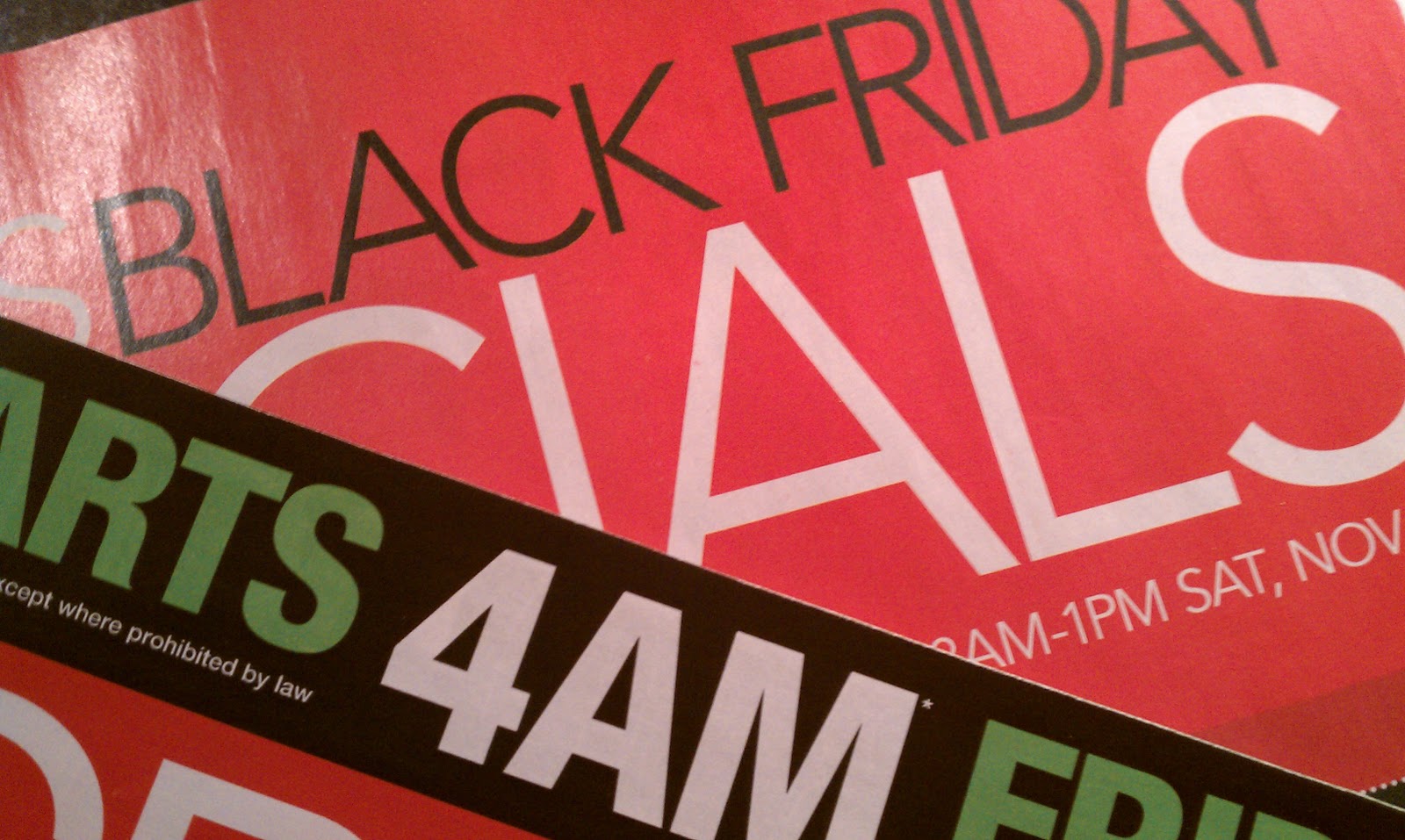
“Black Friday” Radio: Urgency, Anticipation and Mood

Ask a consumer psychologist about the factors that drive Black Friday and you’ll likely hear about urgency, anticipation, and the shopping experience.

Urgency – Stores' short, special sale hours, promotions, limited supplies and  real, artificial or implied scarcity driving consumer feelings of “get it now” or “miss out on today and you’ll be sorry."

Anticipation – Store strategies that have consumers looking forward to and planning Black Friday visits, in effect making time-specific appointments with shoppers and promising pay offs big enough to change their habits.

 
Shopping Mood/Experience – Smart retailers knows that Black Friday shopping is emotional and "part of an energized movement.” They may subscribe to the convergence theory  of like-minded people gathering for a common goal or to a self-feeding theory on crowds, but ultimately stores that hat engage their customers through multiple channels and provide a strong shopping experience will compete at a different level than those that simply conduct transactions.
 

Thursday of course is the day most stations focus on.

But what if each component on our station was an individual brick and mortar store whose success or failure was largely driven by urgency, anticipation and mood?

How would we have done on Black Friday?

Tuesday, November 23, 2010

A + B = $

It’s one thing to use social media to market to people who are aware of who you are and what you’re selling.

But what about those who don’t yet know about you or don't yet know that they need your product?

That’s the subject of this Chris Brogan post, “Two Sides of Marketing,” which could be a great topic for your next sales meeting.

Here’s a snippet.

“Some marketing is designed to convince you that your life would be better if you had this (we’ll call that the A side). Other marketing is designed to find the people who are actually seeking that and give them more education to help them make a decision (this, we’ll call B). When I look at how we use social media more often than not, it’s for B and not A. We usually use social media to listen for the people who are expressing an interest in a product or service that we offer, and then we give them content like blog posts and videos to help them better understand how much better the world would be once you really get the product or service that you want…The A-side of marketing, the “ADVERTISING” side of marketing, still has to sneak in between what we know and what we NEED (being bombastic and smirky here) to know, so that we can then help educate people (the “BRIDGING” side of marketing) that it’s what they want.”

I’ll bet you can find some businesses in your market that would benefit greatly from adding your “A” to their “B.”

Wednesday, November 17, 2010

CRS 2011: What Will You Take Away?

CRS, the Country Radio Seminar, is one of the great learning conventions. The 2011 agenda has relevant sessions no matter where you are on the “experience continuum.”

Have a conversation about CRS and it won't be long before the discussion turns to a specific panel, keynote or take-away that had a positive impact on the attendees job performance or perhaps even life experience.

One of the most memorable and meaningful sessions I've attended was Lou Holtz’ 1997 riveting keynote, “What’s Important Now.” Whether you're pursuing a personal (improving your life) or professional goal (like meeting a deadline, coaching talent, moving your station forward, or working to deliver the highest possible quality product), doing "What's Important Now" is a simple yet powerful plan of action that keeps you focused on achievement.

I’ve been inspired by Lou’s speech for years. That hour alone was worth the entire trip and I'm so glad I didn't miss it.

I hope you don’t miss CRS 2011. I also hope you don’t miss the discount rate of $399 which is good through Friday. After that it will cost you $100 more - which is still a bargain.

Finally, in the CRS spirit of sharing, I hope you'll leave a comment about a Seminar experience that still resonates with you.

Wednesday, November 10, 2010

Just A FEW More Awards From Last Night

Was that a great CMA Awards Show or what?

Unfortunately, just like Thanksgiving dinner, there’s so much hype/anticipation/excitement/work that leads up to it that it’s over all too quickly.

Just like any good holiday meal, there ought to be a few ‘left-overs.’ So in that spirit, here are my left-overs: the “Post-Show Awards.”

Feel free to add your own!


Of COURSE Country Singers Can Sing Live Award: Zac Brown Band and Alan Jackson/As She’s Walking Away. Multiple runners-up, notably Carrie Underwood, Lady A, Dierks Bentley and (insert up to three of your favorite performances here).

Performance With A Purpose Award: Taylor Swift in a very mature setting playing piano with strings as accompaniment. Nothing says ex-cheerleader like this.

Fastest Costume Change Award: Jennifer Nettles. Less than a second.

Best Hat Award: Kristian Bush: For his top hat. He wore a different one for Sugarland's "Duo" acceptance speech. Honorable mention: Kid Rock and Zac Brown (OK, Zac didn't really wear a ‘hat’ per se, but “Best Head Covering” – while more accurate - is just too cumbersome for an award title).

Most Gracious Acceptance Line Award: Lady A’s Dave Haywood: “We love you all and it's an honor to be in the category with you."

Best National Commercial: Taylor Swift CD. Honorable Mentions: Chevy (a Dog and A Chevy) and HP (baby going 70 mph wheelie-thingy).

Sigh of Disappointment Award: ABC’s The Middle “CMA Salute” promos. Nice Awards show but you still don't get it, do you?

You Lookin’ At Me (and not really a camera) Award: Reba during her performance. Does she get the most out of a camera or what? Wow.

Performance That Exceeded (REALLY Exceeded) Even High Expectations: Jason Aldean and Kelly Clarkson (DAY-um!)

Best 20-second Cover: Little Big Town covering Taylor Swift

Best Performance of a Country Song Disguised as a Rock Song: “Born Free”/Kid Rock

Best Hug By A Fiancée: Miranda Lambert after Blake was announced as Male Vocalist of the Year

I’m Really Torqued They Didn’t Get To Sing their Whole Song Award: Band Perry (I played “If I Die Young” during the next 3 commercial breaks and it STILL didn’t come close to make up for having this GREAT song and performance cut short) 

Mispronunciation Award: Sheryl Crow. Everyone knows that Loretta Lynn taught us that the correct pronunciation or “washboard” is “WARSH-board” (just like "tired" is correctly pronounced “tarred”).

Best Line of the Night: Miranda Lambert on being named Female Vocalist of the Year: “I just told Blake I think we need to go to Church.” Runner up: Brad Paisley on Joe Galante.

Can't wait till next year!

Tuesday, November 09, 2010

Take 10: 10 Show Strategies and Tactics You Can Use Right Now

You know how when you’re reading about one thing and you’re struck with how the concepts also apply to something else?

That happened to me as I was reading 10 Steps to More Scientific Social Media Marketing by Dan Zarrella  . While I was reading about Dan’s topic, I was thinking how each of his 10 points also applied to preparing a winning show.

I’ve paraphrased Dan’s 10 points and changed the topic from Social Media Marketing to Show Development. See what you think (and be sure to use the link above to read Dan’s original article).

1.Iterate what works. Do this both for benchmark-type elements of the show (to keep existing benchmarks fresh, evolve old ones, and create new ones) and for your daily content (have multiple “takes” on the same subject).

2. Audience size matters. Obviously pleasing fans is important, but also be cume-aware to keep your show from becoming overly fan-centric and at the expense of growing cume.

3. Find and target influencers. In politics, estimates are that social tools connect with 1% of the voters who are most engaged in your message and that these in turn will influence another 9%. While our ratio may be different, embracing and empowering fans pays dividends.

4. Bigger and louder works – to a point. I’m all about being an occasional spectacle, but great content is the key to loyal, recurring listenership.

5. Personalize. You and me, in your car, on our way home from work – that’s the litmus test for how we talk and what we talk about. Also, “I’m talking about what you’re talking about” only from a more creative, entertaining, fun, interesting, etc. perspective that compels you to listen daily.

6. Don’t wear your audience out. Don’t allow your “content” to be dominated by “do this,” “go here,” and “call now.” Most listeners came to be entertained, not to have new tasks added to their day.

7. Help your audience look cool. What are you including in your show today that will make me smarter, more clever, look better in my friends’ and co-workers’ eyes?

8. Be the authority. Be out in front of everything you can.

9. Avoid too much talk about yourself. Engage others; let listeners see themselves in the stories you tell. Listen more. Same for your social media efforts; make it a conversation not just an oratory.

10. Don’t forget calls-to-action. Use appointments, deadlines, promote-aheads of exclusive content, urgent language, and social media to engage listeners in current and future shows.


Are any of these working for you now? Have any others you’d like to share?

Saturday, October 30, 2010

Fall Rituals: Raking and Writing

Fresh, fun, topical imaging on your station stands out like a just-raked yard in fall. And this time of the year provides plenty of opportunities for writing (and raking).

What will you write for: Halloween, Election Day, the change from Daylight Savings Time, Veterans’ Day/Remembrance Day, Thanksgiving, Black Friday, Christmas, and New Year’s Eve/Day?

Plus weekend chores, 4th quarter movie releases, and likely a number of local events.

Put a stationality spin on your writing, have fun, attract attention. Sound real and listener-focused. Communicate core values. Be brief, sincere and creative.

Just don’t miss the opportunity.

Friday, October 15, 2010

Radio 2010: Listening and Lifestyle Profiles...and Coaching Tool

National ratings data and lifestyle information on the major formats is again available for free in the newly released Radio Today 2010 pdf from Arbitron. Download it free here.

There's lots of good news for country:

• Fall 2009’s combined (PPM and Diary) country share was 13.4% (4.4%/4th in PPM markets and 14.1%/1st in diary markets). That’s the highest share the format has delivered since spring 2002.

• Country radio’s reach is second only to AC.

• The format was number one in every daypart except mornings (#2 behind New/Talk/Information). It was also #1 25-34, 35-44 and 45-54. It was #2 18-24, 55-64 and 65+. 18-24 was the “growth demographic” and has been “up steadily in recent years.”

• 26% of the AQH audience is 18-34 and 42% is 18-44. 18-34s aren’t just cumers; their TSL of 6:30 is just under the 7:00 average 12+ and close to the 7:00 for 25-54 and 7:30 for 35-64.

Non-ratings information on the country audience includes education (half have attended or graduated college), earnings (half live in households earning $50,000 or more), home ownership (70%) and interests (country audiences index high on outdoor activities and slightly above the norm on texting).

For programmers, one of the most useful pieces of data in any Arbitron report is the Audience Composition graph (the Radio 2010 AQH Composition for country is shown). Running graphs for cume and AQH give you a 'big picture' look at both plus the relationship between them.

After checking rankings and PPDV/PPM Weight, Audience Composition is usually the next place I go when breaking out ratings.
My expectations are that the 'comps' will roughly mirror our targeting (usually it does). But when it doesn't, it triggers a series of questions: from 'Is this an aberration?" to an overall evaluation of the relevance and ‘welcoming-ness’ of key station elements.

An Audience Composition graph can also be a talent coaching tool, particularly if you're concerned that a show isn't as aligned with the audience as it should be. Compare a multi-book average of the station's and the show's Audience Composition. If there are undesirable differences, challenge the talent to cite the specific audience appeal for the show overall as well as its specific features and content pieces.

Comparing their perceived targets to the show’s Audience Composition might be what you need to offer congratulations or to shake things up a bit.

Sunday, October 10, 2010

Like THIS for Example

Sometimes a good example is the best way to make your point.

That was what Jon Robbins, Operations Manager/Adventure Radio Group/Savannah thought when he used a Mediabase monitor to issue a “What content do you have planned for Monday’s show?” challenge to his morning shows.

Jon told me, “I saw (the WMJI/Cleveland show highlights) on Mediabase and thought WOW, look at all this great ‘compelling’ content that this show covered in ONE morning. I wished that I had listened – this makes me want to listen – so I decided to share with my Morning guys and ask them what do they have planned for Monday? Cause this is what it will take to get to #1 like John Lanigan.”

Here’s the content Jon shared:

* A new study shows that one in 10 residents of New York City have bedbugs.

* Hosts discussed details of the recent news story about three Florida kids, ages 15, 13, and 11, who saved their babysitting money, bought airline tickets and flew Southwest Airlines to Nashville, Tennessee to visit Dollywood, which is actually in Pigeon Forge, Tennessee.

* A 27 year-old London man parked illegally and found his car “clamped” and was ordered by police to pay the fine and the towing fee, even though the car had not yet been towed. So, knowing they wouldn’t tow the car with a passenger in it, he sat inside the vehicle for the next 30 hours.

* LeBron James was on the cover of “GQ” magazine, and in the interview, spoke about a city rivalry between Akron and Cleveland.

* A couple who went on vacation is suing their realtor for using their house and their possessions while they were gone for “unauthorized sexual escapades,” resulting in stained sheets, furniture, carpets and other surfaces. Century 21 paid $7,000 in repairs, and the agent was fired.

* President Obama was scheduled to come to Columbus on monitor day to encourage voters “not to give in to fear.”

* Hosts discussed the latest round of political commercials, specifically, Ohio state politicians.

* The trial of former Illinois Governor Rod Blagojevich had ended with the jury deadlocked on 23 counts. He was found guilty on one count of lying to the FBI. Blagojevich was planning to appeal the conviction and the state was planning to retry him on the other 23 counts.

* The West Wing of the White House is currently covered in a white tarp. Hosts wondered what was going on under there.

* President Obama’s approval rating has dropped to 44%, the lowest of his presidency so far.

* A twice-convicted murderer has been turned down for parole again, after letters surfaced that he had written to the family of the people he murdered, detailing how he would kill them too as soon as he was released.

* A listener poll was underway on the station’s web site. Listeners were asked to visit the site and answer this question: “Who would you rather see back in Cleveland first, Art Modell or LeBron James?” Hosts discussed each of the men.

* John read several listener emails, one from a Cleveland listener who moved to San Diego and now listens online. Other emails referenced topics of conversation from earlier in the current Morning Show.

* Hosts discussed several of the newer TV shows, such as “Hot In Cleveland,” and “Rubicon.”

* A bicyclist was seen, wearing nothing but a helmet. Police want to know his identity.

* Laurie read several listener emails regarding the Florida kids who flew to Nashville, with various responses.

* A “Newsweek” article, “The Best Countries in the World,” lists the Top 10 countries in which to live as: #1 Finland, #2 Switzerland, #3 Sweden, #4 Australia, #5 Luxembourg, #6 Norway, #7 Canada, #8 The Netherlands, #9 Japan, and #10 Denmark.

Tuesday, October 05, 2010

From Audience Killer to Great Radio in Two Steps

The well-intentioned representative from (insert name of local charity here) comes to your studio and wants to tell you in great detail how your listeners can help out or make a donation. Unfortunately, a lot of listeners didn’t hang around for the specifics because they were never motivated to participate in the first place.

An artist is your guest and usually wants to talk about their latest CD, upcoming show, or something else they have going on right now. Listeners, disappointed they didn’t something personal or ‘behind the scenes,’ drift away as you play and the artist talks about his previously unheard song.

Both of these are audience killers.


You can’t blame your local guests; they’re rarely professional communicators. They don’t know what to say to make people respond. You can’t blame the artist; they’re in the moment and often just trying to get through yet another radio interview from another jock that really isn’t prepared beyond a few basics.

But here’s the thing: you can turn each into compelling radio if you 1) control the agenda that 2) finds and focuses on the Emotional Center.

Your agenda for the local guest is to find the Emotional Center in the story and use it to make listeners WANT to participate. Listeners can figure out HOW later. But if you don’t get me to WANT, you surely won’t get me to HOW.

Here’s a real example: a hospice spokesperson appeared on a morning show and spent 3 minutes talking about the responsibilities, requirements and sign-up procedures are for becoming a volunteer but never once gave listeners a reason to WANT to do this.


Audience killer.

But imagine the listener reaction if the interview started with and stuck to an Emotional Center: perhaps how spokesperson witnessed the daughter of a terminal patient put her arm around a hospice volunteer and, with a smile and a tear, told the volunteer how much she’d meant to her dad these last weeks, how much her kindness was appreciated, and how she’d always be a member of their family.


Find and tell a story like this and you’ll have great radio and a line of volunteers.

Similarly, while an artist may want to talk about a single or a new CD or an upcoming show, you have the chance to make if far more of an event for listeners if you create an agenda that includes mystery, a look behind the scenes, or that engages the artist in a way that reveals the artist as a person behind the star - itself an Emotional Center.


That’s the agenda Steve Stewart, WTNR/Grand Rapids’ OM/AM host of Scrubs in the Morning used for his Tuesday morning interview with Toby Keith. They got around to the new music, but not before Toby was talking like the golf playing, football-loving guy next door. You can listen to it including a feature called the “30 Second Meet & Greet” where a listener gets to end the call with 30 seconds to ask or tell the guest whatever they want.

Have an Agenda/Emotional Center interview story to share?

Tuesday, September 07, 2010

The “Sooner or Later” Tightrope

One of the highlights of the Management Circus is the high wire act – where the “needs of now” on one side are balanced against "longer term objectives" on the other.

If you’re walking this tightrope on a daily basis (as so many of us are), Kevin Roberts, CEO Worldwide of Saatchi and Saatchi says you need two things: a plan and a list.

The plan is a “100 Day Plan” - an aid in helping you accomplish what is important over time. A 100 day plan says Roberts, “lifts your eyes, mind and heart up off the pavement and out to the horizon. It cuts a path through detail swamps and meeting deserts to create action…(to) help you keep on track with what’s most important” vs. what’s just urgent.

Hyperbole notwithstanding, this is good advice.

Get started by listing 10 major objectives you need to accomplish in 100 days or less. For each item on the list, Kevin recommends starting with an action verb and using no more than 3 words:

“Win vs. France, Rehab left knee, Win US Presidency… Make sure each action is measurable and that each one is a stretch. You’ll know when something is a real stretch and when you’re just creating a list with things you can tick off. Review your list every Friday morning. When the 100 Days comes round, the goal is to have each item checked off.”

The second suggestion is maintaining a simple to-do list.

Don’t scoff.

The simple “to do” list was a tool of Thomas Edison (among others) who said it helped him avoid being “consumed by the urgent at the expense of the important.”

Thursday, July 22, 2010

The 50 Minute Oil Change - 50 Ideas for Your Morning Show


Thanks to all who attended the standing room only panel Tommy Kramer and I presented Friday, 7/16/10 at Conclave 35. And a very special thanks to all the great morning show talent who so generously gave of their time and creativity and created a video for us to share (you're credited in the list below). Your efforts were appreciated by us all!


In creating the panel, Tommy and I wanted to share not only just great turnkey bits, but techniques and philosophies that could make you think differently about your show.

It’s no surprise that we couldn’t fit everything into our 50 minutes, but you can download the complete list at http://albrightandomalley.com/.

Here are a dozen to whet your appetite. And, in the spirit of sharing, it would be great if you could leave an ideas too!

1. Developing an Alter Ego enables you to expand the boundaries of what you can do on your show (Kevin Matthews/WLAV)

2. Keep a diary and share it with other players on the show, using it as a jumping off point for content ideas. For bonus points, have artists who visit your studio make up a song based on your journal/diary entries (Wally , WAY-FM Nashville—using his 6th grade journal.)

3. I am T-Pain iPhone AutoTune App: hilarious for you or listeners to “sing” a song about virtually anything.

4. Your own family traditions can be the inspiration for large promotions (Tim Leary/WCTK)

5. Take the show outside the studio for the betterment of the community/world (Cliff Dumas/KSON and Bob Rivers/KZOK)

6. What’s a guy thinking (male talent gives absurd rationale for dumb things guys do)

7. Just before the break, hold a 5-second huddle to remind yourselves of you point, your close, and how you’re evolving the break

8. Brainstorm with others in the building; you’ll get different subjects and different perspectives on the same subject

9. Morning show team members: listen to each other for potential material (J and Julian/WBBM)

10. Study the art of storytelling and learn to be good at it; this is a life as well as a career benefit.

11. The new rule for evaluating phone calls: “too good not to air” vs. “good enough to air.”

12. Courage is essential if you’re going to go from “OK” to “great.”

Don't forget to download all 50 here and, if you'd can, leave one of your own ideas.
 
Have a great show!

Tuesday, July 20, 2010

The 50 Minute Oil Change

Thanks to all who attended the standing room only panel Tommy Kramer and I presented Friday, 7/16/10 at The Conclave. And a very special thanks to all who created a video for us to share (credits in parentheses). Your efforts were appreciated by us all!

In creating the panel, Tommy and I wanted to share not only some great bits, but techniques and philosophies that could make you think differently about your show.

It’s no surprise that we couldn’t get to everything in our 50 minutes but you can download the complete list at http://albrightandomalley.com/.

Here are a dozen to whet your appetite.

1. Developing an Alter Ego enables you to expand the boundaries of what you can do on your show (Kevin Matthews/WLAV)

2. Keep a diary and share it with other players on the show and use it as a jumping off point for content ideas. For bonus points, have artists who visit your studio make up a song based on your journal/diary entries (Wally , WAY-FM Nashville—using his 6th grade journal.)

3. I am T-Pain iPhone AutoTune App: hilarious for you or listeners to “sing” a song about virtually anything.

4. Your own family traditions can be the inspiration for large promotions (Tim Leary/WCTK)

5. Take the show outside the studio for the betterment of the community/world (Cliff Dumas/KSON and Bob Rivers/KZOK)

6. What’s a guy thinking: male talent gives absurd rationale to defend dumb things guys do

7. Just before the break, hold a 5-second huddle to remind yourselves of you point, your close, and how you’re evolving the break

8. Brainstorm with others in the building; you’ll get different subjects plus different perspectives on the same subject

9. Morning show team members: listen to each other for potential material (J and Julian/WBBM)

10. Study the art of storytelling and learn to be good at it; this is a life as well as a career benefit.

11. The new rule for evaluating phone calls: “too good not to air” vs. “good enough to air.”

12. Courage is essential if you’re going to grow from “OK” to “great.”

Have an idea, technique, bit or philosophy you'd like to share? Post a comment.

Sunday, July 18, 2010

'Clave Rave

I've blogged previously about the great learning experience that is the Country Radio Seminar (CRS). But the Conclave too gets terrific marks for its learning conference - this year dubbed “i35 – Freeway to Your Future” - which concluded yesterday.

I was there as both a presenter of a morning show development panel with terrific talent coach Tommy Kramer (download notes from our session Tuesday afternoon at http://albrightandomalley.com/) and also as an attendee – mostly the social media and Internet-related panels.


I answered Art Vuolo’s question on the value of the Conclave by saying it’s about sharing what you know with others while being exposed to new ideas and experiences in return.

In that spirit, here are some ideas I shared and some others I'm passing along:

  • The number one enemy of any show is irrelevant content.

  • “Curation” is a big opportunity. People like someone – including a friend – to tell them what’s important, relevant and valuable.

  • Follow people who follow you on Twitter; reciprocation makes people feel more engaged with you. Thanking people for following you makes you visible to that person’s followers as well.

  • The new success formula for advertisers is “empower, demonstrate and involve/engage;” these replace the old formula of “inform, persuade, and remind.”

  • Podcasts = action. 71% of a podcast’s listeners will visit a website, 62% will consider a new product or service, and 60% will gather more about info about product.

  • Yes, DO think of digital platforms as more than just new avenues of product distribution. And DO think about new ways to delight users with platform-specific content. And DO be aggressive in creating apps that people actually want. But first, fix your stream!

Thanks, Conclave for inviting me to present a panel this year – and to leave with some new ideas to share with others.

Anything YOU’D like to share?


Friday, July 09, 2010

Six Attributes of Premium Brands: How Many Does Your Station Have?

I really like Starbucks' coffee.

I seek it out (fortunately that's not usually difficult) and willingly pay more for it.
To me it's a unique coffee experience (especially the rich, earthy, smoky, intense and satisfying French Roast) that's well worth the reasonably higher price.

I like to share my Starbucks experiences with other Starbucks fans and in turn hear what they enjoy.

Even outside of the coffee, I like Starbucks as a company – their history, initiatives, new products and promotions.

Uniqueness, customer loyalty, higher price point, distribution, promotions and back story: these six attributes that make Starbucks a Premium Brand for me are in fact characteristics shared by most Premium Brands.

How many of these Premium Brand attributes does your station have?

Uniqueness – From packaging to process, Premium Brands have clear elements of differentiation. They also introduce unique new variations of their basic products. Remembering that nuance is lost on most listeners, what most clearly and positively sets you apart from competitors? How are you promoting/exploiting it? What new, unique features or listener-experiences have you launched recently?

Customer Loyalty and Evangelism – Premium Brand customers demonstrate their brand loyalty by sharing their stories about your brand and hearing similar stories from fellow Premium Brand customers. “Pull marketing,” word of mouth, and public endorsements/consumption are part of the core marketing strategy. Are you making it easy for listeners to spread the word about you and interact with you and others about what you’re going?

Higher Pricing – customers expect to pay a realistically higher price, but consumers of Premium Brands still need to feel that they are getting value and receiving a premium experience. The higher the commercial load, the stronger the entertainment value must be. But price is not limited to just commercials; consider costs like the monetary investment or extra steps necessary to listen to your product on other platforms. Is the end experience worth the cost?

Distribution: Speaking of platforms, Premium Brands are widely available. Is your station missing any distribution channels?

Promotion: Many Premium Brands support or dominate niche events (like Red Bull’s involvement in extreme or dangerous sports). Others engage in particularly creative promotions (like Mattel’s Barbie dressed in designer clothes and walking the runway during New York City’s Fashion Week). Starbucks is involved in multiple community and global initiatives. Are there promotional or philanthropic opportunities in your market that you could own that would enhance your station’s brand image among your target listeners?

Back story: To tell a brand’s true back story, some have produced “promotumentaries” for the brand’s website or TV (Patron tequila has done a great job with its back story). A Microsoft study found that “...helping consumers build up their knowledge about a product is what turns casual interest into a premium sale”. What’s your station’s story? Why did it come about? What was your original strategic mission? Is there a powerful story you can tell?

Tuesday, July 06, 2010

Going Once...

Just for fun, I went on e-Bay to see what $399 would buy (for a limited time, $399 is the cost of registering for CRS 2011). I found some cool things but none appeard helpful in furthering a radio career.

A pair of binoculars (90x80 Professional) – techy, yes, but they won’t help you see the future of our industry.

A GPS device for golfers – it might help you find your lost ball, but it won’t help you find new listeners.

A pair of Bruno Magli Raging Venetian black loafers (10 D, pre-owned) – I suppose looking like a "raging Venetian" could help you appear successful, but these probably won't do too much to help you actually BE successful.

A pair of Chanel classic patent gold logo pumps (ladies size 11.5 – new with defects). Really? $400 for defective shoes?

$399 worth of services from a resume writer – which you won’t need because of all the impressive ideas you’ll bring back to your station.

A La Perla Black Label Litterae Bra/Thong 36B/M (no, really, they're for sale for $399).

You can check e-Bay too, but my suspicion is that the $399 you spend registering for CRS, March 2-4, 2011, will be money well spent on your career. Register here. Don't worry, you won't be outbid.

Spending time with your fellow broadcasters, sharing ideas, and creating solutions to problems sounds like a far better way to blow your own horn than buying that $399 used saxophone.